
An EICR (Electrical Installation Condition Report) is a detailed inspection and test of the electrical installation in a property. It is designed to assess how safe the wiring and electrical systems are, highlighting any issues that could lead to risks such as electric shock, fire, or faults that may cause sudden loss of power. The inspection checks the condition of the installation and whether it is suitable for continued use in line with the Wiring Regulations.
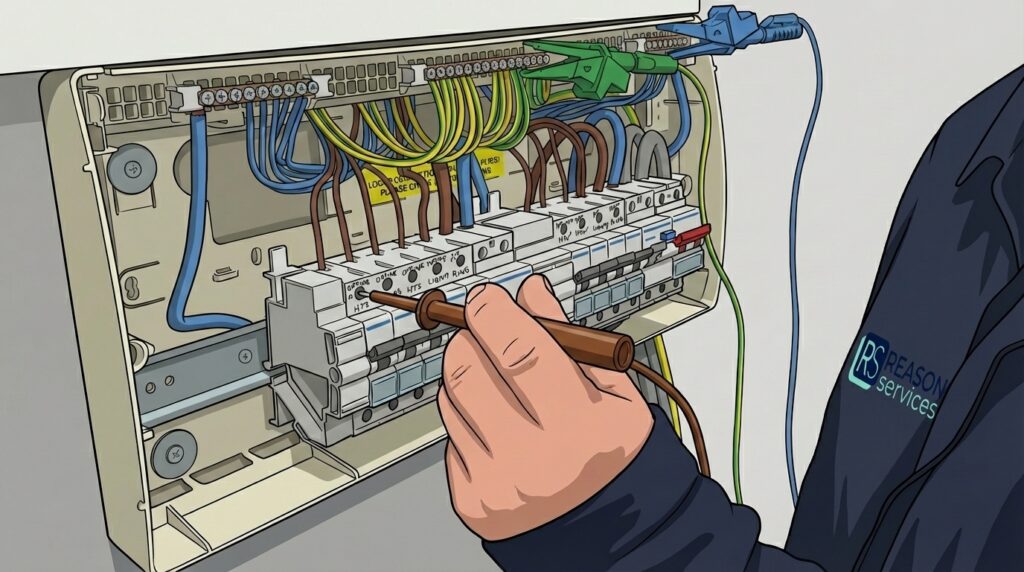
For domestic properties, it is generally recommended that the electrical installation is inspected roughly every ten years to ensure it remains safe. In places such as offices, shops, or rented properties, inspections are usually recommended more frequently or whenever there is a change of occupancy. Landlords have a legal responsibility to ensure the electrical installation in their property is safe for their tennants.
There are several reasons why you may want to have an EICR carried out even when not legally required. These include:
- When buying or selling a property.
- Before starting major building or renovation work.
- If you suspect previous electrical work may not have been carried out correctly.
- A change in your household. If you have a baby on the way and want to make sure there are no hidden electrical dangers, or if older relatives are moving in and you want to avoid power outages leaving them in the dark.
- If your insurance provider requests confirmation that the electrical installation is safe.
- You are planning on having solar, battery or other renewables installed
- After incidents such as fire or flood damage that may have affected the electrical installation.
- The planned installation of a heat pump
- The age of your house and the lack of any recent inspection or works
- Higher risk properties suspectable to fire such as thatched cottages
What does an EICR involve?
An EICR involves inspecting and testing the fixed wiring in your electrical installation. This includes lighting circuits, sockets, cooker circuits, EV chargers, electric showers and much more around the property. It includes the consumer unit, protective devices, the incoming supply and the protective earthing arrangements. This is both a visual inspection and a physical test of the wiring using electrical test equipment. As such most circuits will have to be switched off at some point during the inspection to allow the safe and thorough testing to take place.
Once the inspection is complete, you’ll receive a report that states whether the installation is considered satisfactory or unsatisfactory for continued use. Any issues found during the inspection are given a code explaining their potential danger or risk as shown below:
- C1 – Danger present: Immediate risk and urgent action required. In this case we would make the issue safe by isolating the circuit affected or carrying out urgent remedial work.
- C2 – Potentially dangerous: A fault that could become dangerous and should be addressed as soon as possible. We would inform you what further work should be carried out.
- FI – Further Investigation required: Something has been identified that needs additional checks without delay. This is not commonly used as we would expect to be able to carry out these investigations before completing the works and provide the correct code.
- C3 – Improvement recommended: Not considered unsafe, but the inspector may recommend upgrading or improving part of the installation. These may be issues where the install was completed to previous standards and improved protection or safety is now available.
If any C1, C2 or FI observations are recorded, the installation as a whole will be marked unsatisfactory. C3 observations are advisory, meaning it is up to you to decide whether you would like to follow the recommendation and carry out improvements. We do not employ scare tactics at Reason Services, we would only give measured advice tailored to your circumstances. A lack of modern safety measures does not automatically condemn your installation, but some advances in technology are more valuable to saving life and limb than others.
At the end of an EICR you will be issued a report containing details of the inspections and tests carried out. It will also include limitations of the report, such as circuits we were not able to isolate and test or concealed wiring that cannot be visually inspected. This is more than just a paper exercise, the inspector and their company are taking on legal responsibility for the safety of the installation going forward. This means in the event of an incident causing injury or property damage, the inspector could be held liable if he cut corners or failed to carry out the inspection according to the standards set out in the Wiring Regulations. At Reason Services we hold both public liability insurance specifically for electrical work and professional indemnity insurance. We are also trained and competent and have invested in calibrated equipment that meets the legal requirements to do this work.
So come on then, how much does it cost?
At Reason Services we price for a reliable, trustworthy and thorough inspection. We do not price low in the hope of scaring the homeowner into using us to carry out remedial work.
Our prices are £24 per circuit for the first eight circuits. £16 per circuit for any additional circuits. An average UK three bed house may have around six to ten circuits.
So what is a circuit? A circuit is wiring supplied from a consumer unit to outlets, fittings, appliances or accessories. Usually each circuit is protected by its own circuit breaker, fuse, or other protective devices in the consumer unit. Examples in a standard house would be a socket circuit, upstairs lighting, downstairs lighting, electric shower, cooker and garage.
How do I identify how many circuits I have?
It is possible to get a rough idea of how many circuits you have by counting the protective devices in your consumer unit or fuseboard. Sometimes two circuits are connected to one device and other times those devices are simply spares, so this is only a guide.
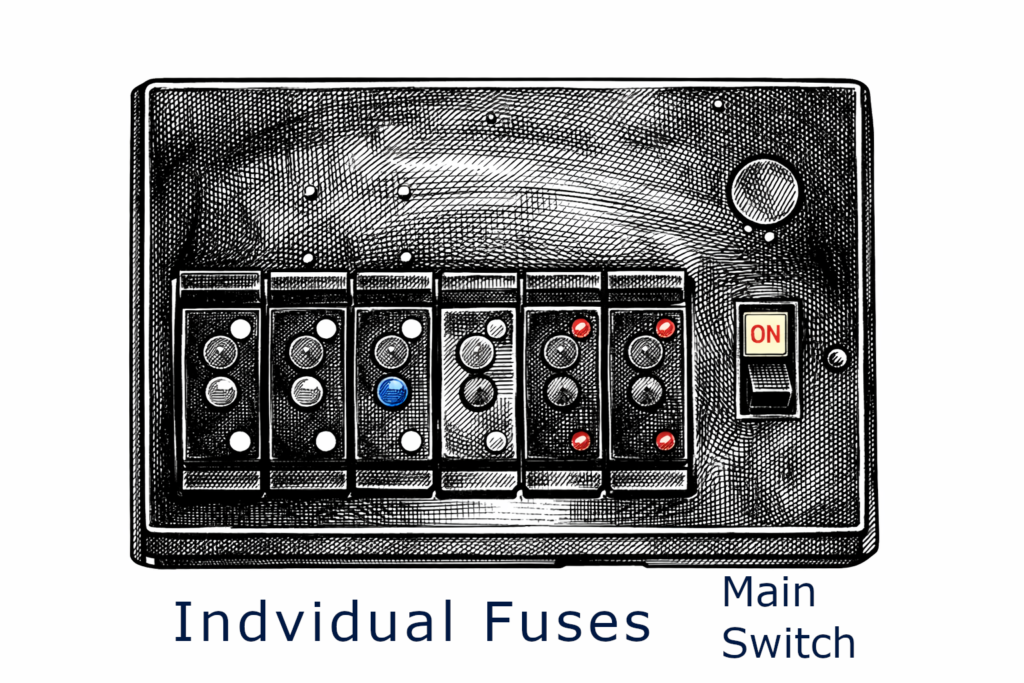
There are really three distinct eras of commonly found consumer units. The first is the traditional fuse box, either containing rewireable fuses or more modern switchable circuit breakers designed to fit into the rewireable format. The picture below shows an example of this. You do not count the Main Switch Shown on the right hand side. You would count the six rewireable fuses shown. If the slot is empty do not count it. The circuit may have a switch operated circuit breaker similar to those shown on the modern boards below. Another type of older consumer unit could have toggle switches like the one used as the main switch. In this case you would count the individual switches minus the main switch.
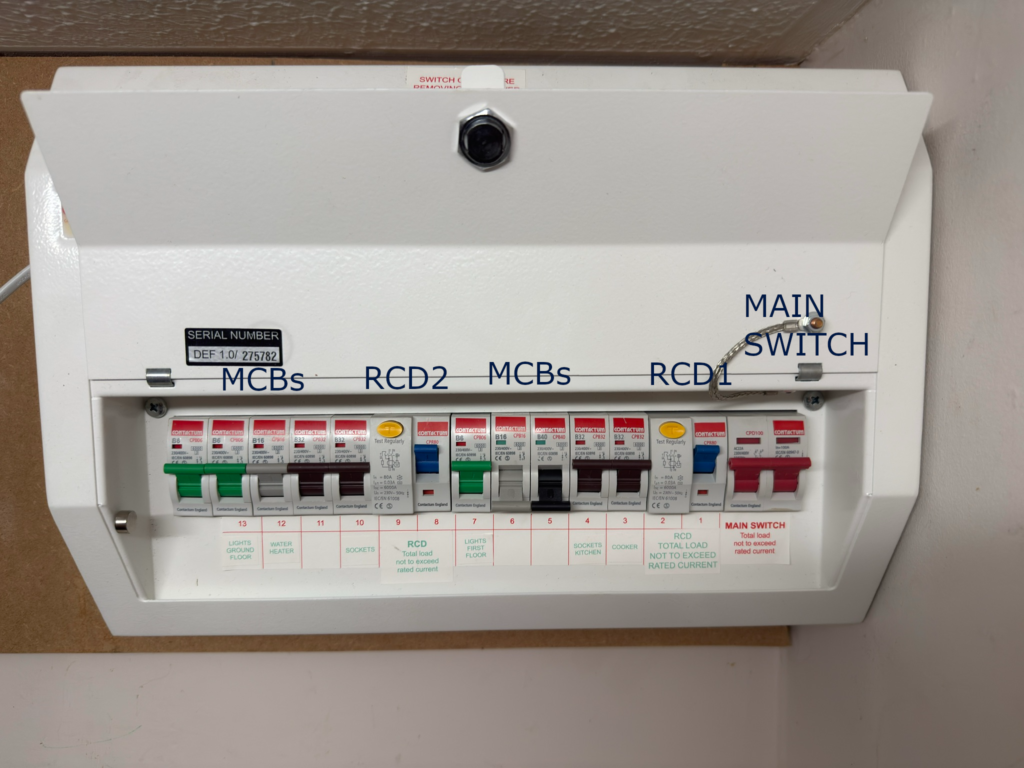
The common modern consumer unit is the Dual RCD or split load board. This often presents with a main switch on the right or left, two further wider devices with “Test Buttons” which are the RCDs and then the individual circuit breakers (MCBs). For these you would only count the individual circuit breakers, not the main switch or the RCDs. Smaller boards may have only one RCD. See picture below for guidance.
The modern equivalent of the above is the the RCBO board. Instead of having one or two RCDs split across multiple circuits, it will have one Main Switch, and multiple RCBOs. These are both RCDs and circuit breakers. They look much the same as the MCB but will have a “TEST” button. Each RCBO is one circuit.
When counting, include switched off circuits unless you specifically know they are spare, as unused circuits still need to be tested if they can be turned back on.
Any circuits sharing one circuit breaker will be counted as two circuits, and any spares without a circuit connected will be taken off your price. This serves purely as a guide to our pricing. For a better idea, send us a picture.
But I have seen EICRs advertised for £75?
The cheap EICR is a false economy. They are offered by firms who would expect their contractors to complete multiple EICRs per day. One trap to avoid when getting a EICR are the quick in and out where they miss out, limit or just make up results to get in and out as fast as possible. This corner cutting could leave you with an unsafe property and a worthless piece of paper. The other trap is the cheap EICR followed by a list of remedials that they have inflated in order to scare more work out of you. Both of these tactics are completely at odds with providing a safe and quality inspection. You are ordering the work for a reason, whether that is personal peace of mind or a legal duty to protect tenants’ or users of the building, these firms do not offer anything other than a legally questionable tick in the box or a list of works you never actually needed.